Trying to pin down the right Huber Heights neighborhood or home style for your needs? You’re not alone. With prices that often land in the roughly $200k to $230k median range and a wide mix of ranches, split‑levels, and established subdivisions, it can be hard to know where to start. In this guide, you’ll get a clear, local look at common home types, price bands, and neighborhood options, plus how location and commute shape day‑to‑day living. Let’s dive in.
Why Huber Heights works
Huber Heights blends value, access, and variety. The city has about 43,000 residents, a median household income in the mid‑$70k range, and a strong homeownership rate above 70 percent, according to DataUSA’s Huber Heights profile. That economic base supports steady housing demand without the bidding wars you see in hotter coastal markets.
Location is a big win. You’ll be next to I‑70 with quick connections to I‑75 and key state routes, which makes regional commuting straightforward. The city highlights its highway access as a core advantage on the official Huber Heights site. Typical travel‑to‑work times average in the low‑20‑minute range per DataUSA, which lines up with practical drives to major Dayton employers.
Market tempo is moderate. Citywide days on market and price per square foot sit in a middle band for the Dayton metro, with recent price per square foot often in the low $140s and homes moving at a steady suburban pace. The takeaway: you’ll have time to compare options, but the best listings still go quickly when priced right.
Common home styles
Mid‑century roots
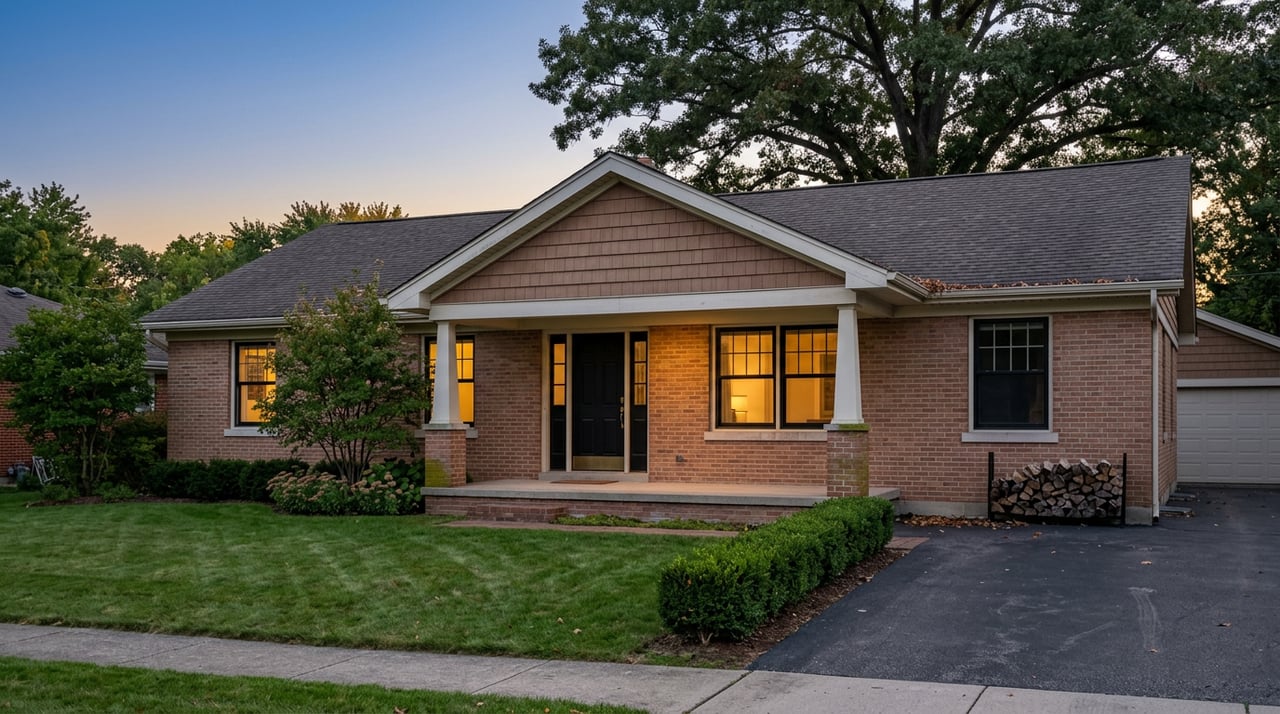
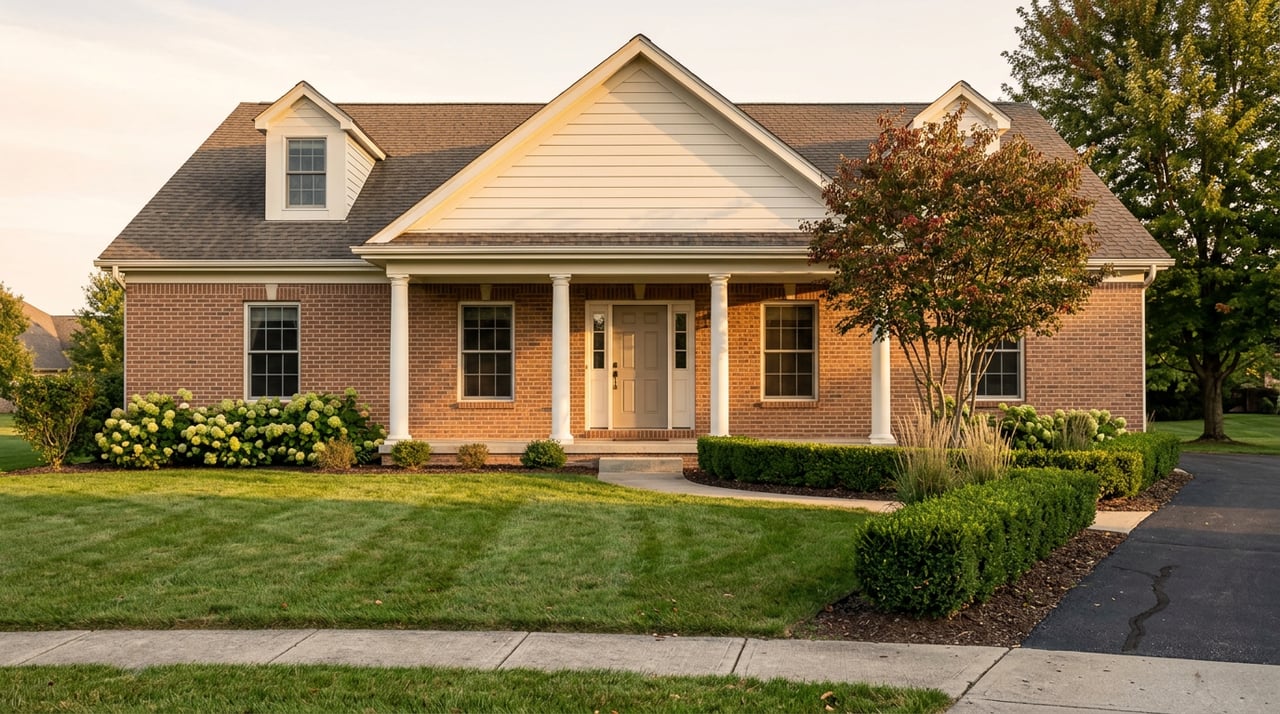
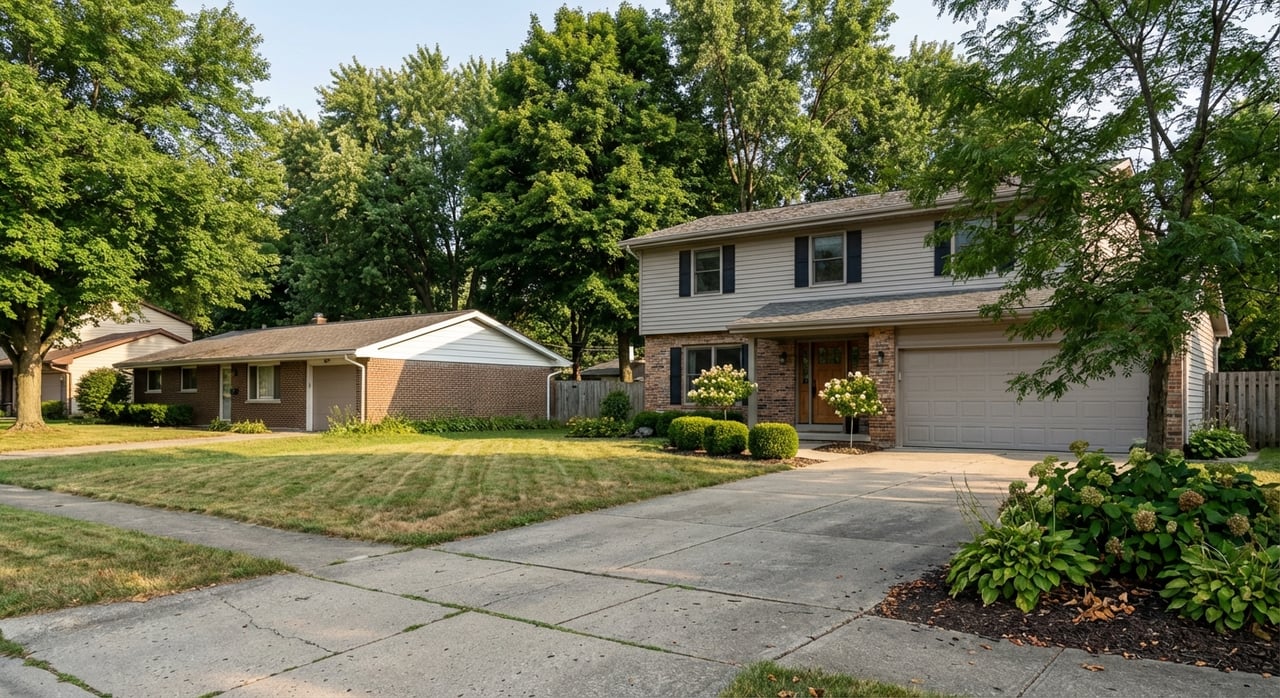
Most of Huber Heights grew in the 1950s through the 1970s, which is why you’ll see a high share of single‑level ranches and split‑levels. ZIP‑level housing summaries confirm a dominant mid‑century stock across the city’s core ZIP, 45424, in sources like UnitedStatesZipCodes.org.
Sizes and layouts
Expect many homes in the 1,000 to 1,800 square foot range. Three bedrooms with one or two baths are common, with some larger two‑story homes appearing in later subdivisions. Renovated ranches and updated split‑levels show up often, especially in price bands near the city median.
Lot sizes and yards
Lots typically run about 7,500 to 12,000 square feet, which is roughly 0.17 to 0.28 acre. Larger parcels exist on city edges or in select pockets, but most neighborhoods offer the classic suburban yard scale. When comparing addresses, confirm exact lot dimensions through county parcel records.
What to check on older homes
Because much of the inventory is mid‑century, plan to review systems carefully. Roof age, HVAC, windows, and electrical updates are common focus areas during inspections. Well‑maintained homes may already have these upgrades, which can deliver long‑term savings.
Neighborhood options
The Heights for convenience
If you want quick access to retail, dining, and entertainment, look near The Heights along Brandt Pike. The area includes the Rose Music Center, a regional draw for concerts and events. Learn more about the venue via the Rose Music Center page. Homes near this corridor offer convenient access to errands and seasonal happenings.
Forest Ridge and Quail Hollow
On the Huber Heights and Riverside edge, Forest Ridge and Quail Hollow feature larger yards, HOA structures, and community amenities like parks and tennis. You’ll see more two‑story options here and, in many cases, higher finishes that can push values above the city’s core median. Inventory is tighter, so active buyers should monitor listings closely.
Higher‑value pockets
Neighborhoods such as Pheasant Hill and Gateway often trade above the city median due to newer construction periods, renovations, or larger lots. If your budget targets the upper tier of the Huber Heights market, these areas are worth a close look.
Older central blocks
Closer to the city’s older corridors, you’ll find smaller mid‑century ranches and split‑levels that can be strong value buys. Some will need cosmetic or systems updates. For buyers open to renovations, these streets can unlock equity potential.
Price ranges: what your budget buys
- Under $150k
- Expect smaller ranches or 2‑bed options, often needing updates. Move‑in‑ready choices do appear, but they’re less common at this level.
- $150k to $260k (core market)
- This is the largest pool of inventory. You’ll see many 3‑bed ranches and split‑levels, 1,000 to 1,800 square feet, and typical lots around 0.17 to 0.25 acre. Recent city medians sit inside this band.
- $260k to $350k (move‑up tier)
- Look for larger footprints, recent renovations, and preferred pockets like Forest Ridge or Pheasant Hill. Selection is more limited, so expect competition for well‑presented homes.
- $350k and up (select listings)
- You’ll find the most upgraded properties, larger lots, or occasional newer builds. For consistent inventory above this tier, some buyers also compare nearby suburbs with higher median prices.
Tip: Because citywide medians vary by data source and time window, ask for a recent 1 to 2 month set of comparable sales for the specific neighborhood you like. That will sharpen your pricing strategy and help you move confidently when the right home appears.
Location factors that matter
Highways and commute
Huber Heights sits next to I‑70 and near the I‑70/I‑75 interchange, with Old Troy Pike and Brandt Pike providing direct north‑south access. The city emphasizes highway connectivity as a local advantage on the official site. If you commute, map your route from each candidate address during your actual drive time for a realistic read.
Major employers nearby
Wright‑Patterson Air Force Base is a dominant regional employer and a major driver of local housing demand. Planning documents and local reports call it the largest single‑site employer for the metro. For context on the area’s development planning, see the Brandt Pike revitalization materials referenced in the Brandt Pike Plan. Many buyers choose Huber Heights because it keeps the WPAFB commute efficient without sacrificing suburban space.
Transit and mobility
RTA serves Huber Heights with regional bus connections, and the agency has described adjustments and on‑demand options that improve east‑west links. For current routes and service changes, review recent city briefings such as the RTA update archived by Huber Heights. The area is still primarily car‑oriented, but transit can support specific commute patterns.
Schools and research
District boundaries can affect your decision. Always verify school assignments and performance directly with the district. Start with the Huber Heights City Schools site and contact the district for the most current information.
Huber Heights vs. nearby suburbs
- Beavercreek
- Generally higher listing medians and newer subdivisions with significant retail anchors. Many buyers compare Beavercreek when seeking newer builds but at a higher price point.
- Centerville
- Often reports medians in the $300k and up range with established neighborhoods and a broad mix of single‑family homes. Inventory leans more expensive compared to Huber Heights.
- Kettering
- Medians typically sit above Dayton proper but vary by neighborhood. Huber Heights often undercuts Kettering on price while offering similar highway access.
- Dayton proper
- Lower average medians overall. Huber Heights provides a more suburban lot and yard profile while still keeping you close to downtown.
Smart next steps
- Clarify your budget band and must‑haves. Use the ranges above to target the right pockets and home types.
- Get address‑level comps and a recent sale snapshot. A 1 to 2 month comp set will show how quickly similar homes are moving and at what price.
- Plan for mid‑century inspections. Ask your inspector to focus on roof, HVAC, windows, and electrical updates typical of 1950s to 1970s homes.
- Map your commute at live times. Confirm drive times to WPAFB or downtown using your typical departure window.
- Verify school assignments. Confirm directly with the district before you submit an offer.
- Check parcel details. Confirm lot size in county records and review HOA documents when applicable.
Ready to zero in on the right street and the right price? Connect with Michele Hines for local comps, on‑market alerts, and a clear plan to buy or sell in Huber Heights.
FAQs
What home styles are most common in Huber Heights?
- You’ll mostly see mid‑century ranches and split‑levels from the 1950s to 1970s, with some later two‑story homes in planned subdivisions.
How much does a typical Huber Heights home cost?
- Recent sources show a citywide median roughly between $200k and $230k, though exact values vary by neighborhood, updates, and time of year.
Which Huber Heights neighborhoods have larger lots or HOAs?
- Forest Ridge and Quail Hollow often feature HOA amenities and larger yards; higher‑value pockets like Pheasant Hill and Gateway can also offer larger or upgraded homes.
Is Huber Heights a good fit for WPAFB commuters?
- Yes, proximity to I‑70 and the I‑70/I‑75 corridor keeps the drive efficient; always test your exact route at commute times from each prospective address.
What should I watch for when buying an older home in Huber Heights?
- Focus on systems: roof age, HVAC, windows, and electrical updates, plus any permits or renovation history that document recent upgrades.
How does Huber Heights compare with Beavercreek or Centerville on price?
- Huber Heights generally offers lower medians and more value options, while Beavercreek and Centerville tend to have higher medians and more newer‑build inventory.