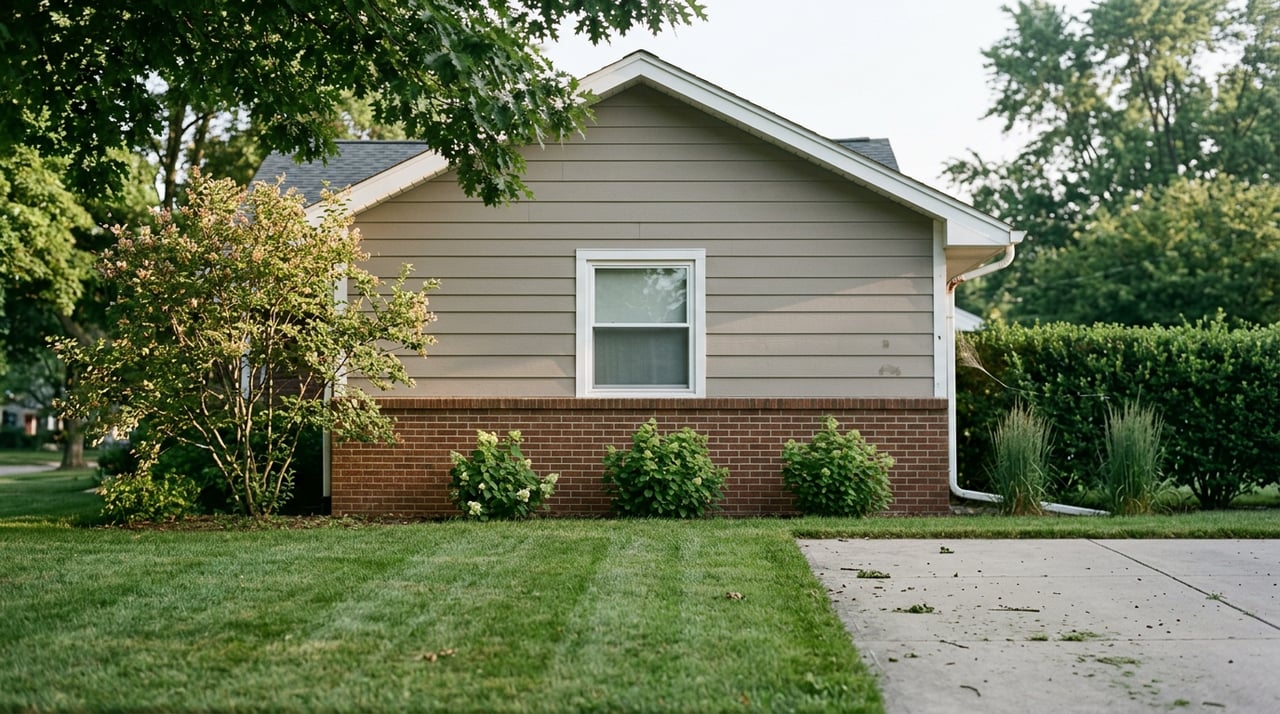
A seller in Madison Township called me last spring convinced she had a problem. Her house sits on a well and septic system, and she had read three national guides in a row that all said the same thing: pre-sale septic inspections are required in most counties before a house can change hands. She wanted to know how fast she could get one scheduled and how much it would delay her closing.
The honest answer took the wind out of her worry, and it is the same answer I give almost every well-and-septic seller in this village. Clark County does not require it. There is no ordinance, no health district rule, no line item in the county code that says a septic or well inspection has to happen before your house can sell. That single fact changes how a South Charleston seller should plan a listing, and it is almost never the fact these guides lead with.
The Question Every Well-and-Septic Seller Asks First
South Charleston sits in Madison Township, in the southeastern corner of Clark County. It is a small village, and outside the older, tighter-knit blocks near downtown, a meaningful share of the housing stock runs on private well and septic rather than municipal water and sewer, which is typical for small Ohio villages surrounded by farmland.
When a seller here asks whether the county will make them get their system inspected before listing, the Clark County Health Department's own guidance settles it plainly. There is no law requiring an inspection of these systems by the local health district in order to sell a house. The department will inspect a system, but only when someone asks. The Clark County Health Department conducts inspections of sewage disposal systems and private water systems on request, for the purposes of real estate transfers and refinancing, and these inspections are sometimes required by the lender or may be requested by the buyer or seller.
Read that closely and the mechanism becomes clear. The inspection is not a public mandate. It is a private contract term that a lender or a buyer chooses to impose, deal by deal. That distinction matters more than most sellers realize, because it means the requirement can be negotiated, waived, or timed differently depending on who is financing the purchase and how the offer is written.
What Ohio Law Actually Requires, No Matter What County You're In
None of this means a South Charleston seller can skip disclosure. Ohio's statewide rules apply here exactly as they do everywhere else in the state, and they do not care whether your county runs a septic inspection program.
Every seller of a one-to-four-unit residential property in Ohio has to complete the Residential Property Disclosure Form, and it covers structural condition, water and sewer systems, environmental hazards, and known defects. Specifically, the form's 11 categories include water supply, whether public or well, along with water quality and treatment systems, and sewer system, whether public or septic, along with system condition and maintenance.
That is the part no county opts out of. Whether or not Clark County ever sends an inspector to your property, you are still legally obligated to state, to the best of your knowledge, what kind of water and sewer system serves the home and what condition it is in. The absence of a county-mandated inspection does not lower the bar on honesty. It just means nobody outside the transaction is going to verify your answer before the sale closes, which puts more weight on getting it right the first time.
Why an Inspection Still Happens Anyway
I have never had a well-and-septic sale in South Charleston close without some kind of inspection touching the property, county mandate or not. Buyers ask for it. Conventional and FHA lenders frequently want it as a condition of the loan. And even when nobody requires it, a smart buyer's agent recommends it because a septic failure discovered after closing is expensive and hard to undo.
The numbers back up why this matters to negotiate ahead of time rather than after an offer lands. A comprehensive point-of-sale septic inspection in Ohio usually costs between $300 and $600. On the maintenance side, the EPA and Ohio Department of Health recommend pumping every 3 to 5 years for a typical family. If your last pump-out predates that window, a buyer's inspector will flag it, and you will be negotiating from a weaker position than if you had simply scheduled it before listing.
On one of my own recent listings on a private road in Madison Township, the sellers had kept up a strict service rhythm on their geothermal system and had their septic serviced consistently for years. That paperwork did more to reassure the buyer's lender than any single repair could have, and it moved the transaction along without a renegotiation over price. Documentation, not the absence of a county mandate, is what actually protects a seller's timeline.
The Patchwork That Catches People Off Guard
Part of why so many sellers assume an inspection is required here is that it genuinely is required almost everywhere else in the state, just not uniformly. Point-of-sale inspection programs vary significantly across Ohio's 88 counties, creating a patchwork of requirements that confuse buyers and sellers.
| County | Point-of-sale septic rule |
|---|---|
| Clark County (South Charleston) | No inspection required by law, done only on request |
| Summit County | Requires inspections before listing and prohibits closing until systems pass or receive conditional approval with repair agreements |
| Cuyahoga County | Mandates inspections for all properties with on-site systems, but allows 60 days after closing to complete repairs |
| Franklin County | Requires inspections only for properties that haven't been inspected within the previous 3 years |
| Hamilton County | Requires inspections within 12 months of sale, with fees ranging from $200 to $400 |
Summit County's ordinance is written as a hard stop on the transaction itself, not a recommendation. A property served by a private system there simply cannot transfer until the health district's evaluation is filed. Clark County has no equivalent language on the books. If you moved here from Akron or Columbus, or if you have been reading guides written with those counties in mind, the gap between what you expected and what Clark County actually does can feel like a mistake in your own paperwork. It is not. It is just a different county.
What the Ohio Supreme Court Just Narrowed
There is a second layer to this that changed last year, and it works in a seller's favor if you understand where the line sits. The Ohio Supreme Court clarified what sellers must disclose and what buyers must uncover under the state's residential property disclosure rules in Ashmus v. Coughlin, Slip Opinion No. 2025-Ohio-2412.
The buyers in that case had planned to demolish and rebuild a lakefront home, discovered a sewer line running through the property that interfered with their construction plans, and sued for fraud and failure to disclose. The court sided with the seller. The disclosure form is intended to alert buyers to defects that affect ordinary residential use, not potential obstacles to specific redevelopment plans. A working sewer line that's visible in public records does not require disclosure, even if it affects the buyer's intended use.
For a South Charleston seller with a well and septic system that works fine for ordinary living, this ruling draws the boundary clearly. You disclose the system's type and known condition. You are not obligated to anticipate every possible future use a buyer might have in mind for the property, and a functioning system that is recorded and visible does not become a hidden defect just because a buyer later wishes it were somewhere else.
A Practical Pre-Listing Sequence
If you are getting ready to list a well-and-septic property in South Charleston, here is the order I walk sellers through.
- Pull your last pumping and inspection records. If it has been more than three to five years since the tank was pumped, schedule it before you list, not after an offer arrives.
- Confirm the system type and any known issues honestly on the Ohio Residential Property Disclosure Form. Water supply and sewer system condition are two of the 11 required categories, county mandate or not.
- Ask your agent whether the buyer's likely loan type, conventional, FHA, or cash, tends to carry its own inspection expectations, since that will shape your timeline more than anything Clark County requires.
- Keep service records, receipts, and any prior evaluation reports together in one file. That documentation moves faster in a negotiation than a defensive explanation.
- Do not assume silence from the county means the system is fine. It only means nobody outside the transaction has checked.
Short FAQ
Does my lender require a septic inspection even though Clark County doesn't? Many do, particularly on FHA loans. It is worth asking your buyer's lender directly rather than assuming either way.
What happens if a voluntary inspection turns up a problem? It becomes a negotiation point, not a legal barrier. Clark County has no rule that halts a sale over a failed system, but a buyer can still walk, ask for a credit, or ask for repairs before closing.
Do I have to disclose exactly where the well or septic tank sits on the property? The disclosure form asks about system type and known condition. Under the reasoning in Ashmus, a system that is functioning and a matter of record does not require you to map out its exact placement unless it is physically defective.
If you are weighing a sale in South Charleston and want a clear read on what your specific well-and-septic property is worth and what buyers in this market are actually asking for, reach out to Michele Hines for a free home valuation and a plain-language walk-through of what your listing will and won't require.