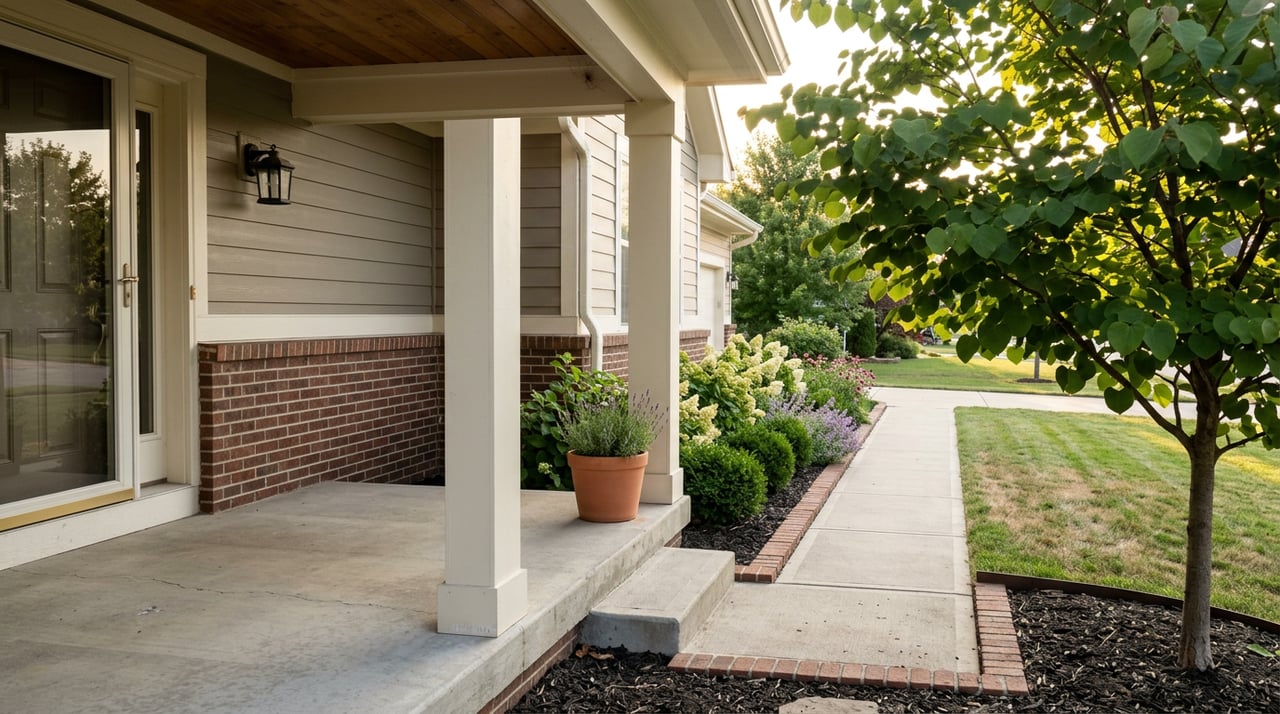
The Springfield market is moving. Coldwell Banker Heritage's March 2026 update put local closings at 354 for the month and days on market at 77, both improving on February, and by early summer Zillow data cited by regional agents had homes going pending in roughly ten days. If you own a pre-1978 house near downtown, Warder Park, Snyder Park, or the Wittenberg blocks, that tempo makes it easy to assume the offer is the finish line.
It isn't. In 2026, a Springfield seller of an older home has three independent ways a signed contract can be unwound after the fact, and two of them are new or newly weaponized this year. The friction is not in the inspection. It is in the paperwork that runs alongside it.
The Thesis, In One Line
Speed of sale does not protect a Springfield seller from disclosure-timing risk. On an older house, the sequence in which you deliver the state disclosure form, the federal lead notice, and any wholesaler paperwork matters more than the price you agree to.
Rescission Trigger #1: The Wholesaler Letter You Almost Signed
If you own a long-held home in a Springfield neighborhood with heavy investor mail, the odds you have already received an unsolicited offer are high. As of March 2, 2026, Ohio Revised Code § 5301.95 (created by Senate Bill 155, signed by Governor Mike DeWine on December 1, 2025) rewrote what has to happen before a wholesaler can bind you to a contract.
A wholesaler under the statute is a buyer who signs a purchase contract intending to assign it to a third party for a fee, without ever taking title. Before you sign anything, that person must hand you a standalone written disclosure, printed in boldface type no smaller than 12 points, telling you they do not represent you, that they may assign the contract for profit, and that the price you agreed to may be below market value. The full text of ORC 5301.95 sets out the exact statutory language.
If they skip that step, three things follow:
- You may cancel the contract at any time before the close of escrow, without penalty.
- Any earnest money the wholesaler paid must be released back to you within 30 days.
- The failure is treated as an unfair or deceptive act under Ohio's Consumer Sales Practices Act, which lets you recover actual damages plus up to $5,000, and lets the Ohio Attorney General bring an enforcement action.
Ohio's Division of Real Estate and Professional Licensing, together with the Department of Aging, flagged in a March 2025 consumer alert that these unsolicited pitches disproportionately target older homeowners. Superintendent Daphne Hawk framed the new law, in a March 2, 2026 statement, as protection so that "no Ohioan is caught off guard by a contract they didn't fully understand." Springfield's older housing stock and long-tenured owners put this town squarely in the target zone.
Practical read: if a letter or door-knock offer arrives, do not sign the purchase agreement in the same meeting. Ask for the separate boldface disclosure. If it isn't produced, that is your cue to walk, or to keep the paperwork you have and treat the offer as canceled at any point up to escrow.
Rescission Trigger #2: The State Disclosure Form, Delivered Late
Ohio's Residential Property Disclosure Form has been required for one-to-four-unit residential sales since 1993 under ORC § 5302.30. The form is published by the Ohio Department of Commerce, Division of Real Estate & Professional Licensing, and covers water supply, sewer, roof, foundation, basement and crawl space, plumbing, electrical, mechanical systems, hazardous materials, floodplain status, and other material conditions. You can pull the current form and instructions directly from the state.
Two features of the statute matter more than the checklist itself:
The delivery window. The form has to reach the buyer before the buyer signs the purchase contract. If it arrives after signing, the buyer gets a clean statutory right to rescind under § 5302.30(K), within three business days of finally receiving the form or within 30 days of contract, whichever comes first. There is no requirement to prove damages. The right exists because the paperwork was late.
The knowledge standard. Sellers only have to disclose what they actually know, and good-faith approximations are permitted where facts are uncertain. That protects an owner who genuinely does not know the age of a buried oil tank. It does not protect an owner who marks "no" next to a known basement seep because the last rain was months ago. Ohio courts have kept a live path to fraud claims for knowing misrepresentation, and text messages, contractor invoices, and prior inspection reports frequently become evidence in those disputes.
On an older Springfield home, the highest-risk lines on the form are the ones most likely to have a history: past water intrusion in a stone or block basement, roof age and prior repair, oil-to-gas furnace conversions, prior asbestos abatement, any known lead paint, and prior sewer line work. Answer them from the record you have, not from memory.
Rescission Trigger #3: Federal Lead Paint on Anything Pre-1978
If the house was built before 1978, Title X of the Residential Lead-Based Paint Hazard Reduction Act of 1992 layers a separate federal set of obligations on top of the state form. You must deliver the EPA's Protect Your Family From Lead in Your Home pamphlet, disclose any known lead-based paint or hazards, provide any records or reports you have, include the Lead Warning Statement in the sales contract, and give the buyer a 10-day period to conduct a lead-based paint inspection or risk assessment before they are bound.
Most Springfield homes near downtown and around Wittenberg fall inside this window. Skipping the pamphlet or shortening the 10-day window to accelerate a fast closing creates a federal problem, not just a state one.
What Springfield Inspectors Actually Look For on Older Stock
The inspections that show up on contracts around here reflect the age of the housing, not a generic checklist. Local firms including Building Confidence Property Inspections and MVP Inspectors describe the same pattern of findings on Springfield's older neighborhoods:
| Area | What buyers typically order | Why on an older Springfield home |
|---|---|---|
| Sewer lateral | Camera scope | Aging clay lines and root intrusion in mature-tree neighborhoods |
| Electrical | Panel and branch review | Knob-and-tube remnants, mixed updates, undersized service |
| Heating | Combustion and venting | Oil-to-gas conversions with legacy flue paths |
| Environmental | Radon, lead paint, asbestos | Pre-1978 finishes, basement radon variance |
| Structure | Foundation, crawl space, moisture | Stone or block basements, seasonal water table |
| Exterior | WDO/termite | Wood framing and mature landscaping |
The point of naming these is not to alarm. It is to argue for a pre-listing inspection when the home is older than the seller has owned it. Findings you learn about first become items you can price around or disclose cleanly. Findings the buyer's inspector surfaces during a five-day window become renegotiation leverage or, worse, a walk.
A Pre-Listing Sequence That Respects All Three Triggers
Order matters. On an older Springfield home in 2026, a defensible pre-listing sequence looks like this:
- Pull whatever permit history exists on prior updates through the City of Springfield's Building Regulations office, and gather contractor invoices, prior inspection reports, and any environmental records.
- Order a pre-listing inspection with a sewer scope. Fix or price.
- Complete the Residential Property Disclosure Form from documents, not memory. Have it in the listing packet on day one so it is delivered before any buyer signs.
- If the home is pre-1978, assemble the federal lead-paint packet in the same folder.
- Decide in advance how you will handle unsolicited wholesaler mail. Any offer that does not arrive with a separate, boldface ORC 5301.95 disclosure is a signal, not a shortcut.
Do that, and the speed of the market becomes an asset. Skip any of it, and a house that would have gone pending in ten days becomes a house that gets un-pended in twenty.
Short FAQ
If a buyer offers to waive inspection, does that help me on an older home? It helps closing certainty and hurts nothing about your disclosure duties. The state form still has to be delivered before contract, the federal lead requirements still apply, and knowing misrepresentation still exposes you after closing. Waived inspection is not waived disclosure.
Does the new wholesaler law apply if the buyer is buying to hold, not to assign? The statute is written around wholesalers acting as grantee who intend to assign or novate the contract for a fee. A true end-buyer investor is a different animal. If you cannot tell from the offer paperwork which one you are dealing with, treat it as a wholesaler and ask for the disclosure.
What if I inherited the property and never lived in it? Some transfers, including certain estate and fiduciary transfers, are exempt from the state disclosure form. The exemptions are fact-specific, and even an exempt seller can be liable for concealing known defects. A short call with a real estate attorney before listing is cheaper than a post-closing dispute.
This article is general information about Ohio disclosure and inspection practice, not legal advice for a specific transaction.
Ready to see what your Springfield home is worth in the current market before you make any of these decisions? Michele Hines will walk the paperwork, the pre-listing prep, and the pricing with you in one sitting. Get Your Free Home Valuation to start the conversation.